SDT fatty rat multi-organ complications data for ATTD-ASIA 2025
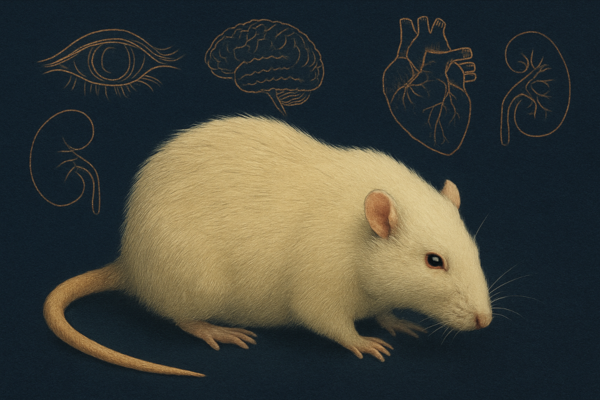
This page summarizes SDT fatty rat data highlighted for ATTD-ASIA 2025. The SDT fatty rat is a translational model of type 2 diabetes that develops multi-organ complications affecting kidney, retina, heart, peripheral nerve, and histopathology endpoints.
This page is intended for preclinical and translational researchers. It summarizes non-clinical data and does not provide medical or treatment advice for patients.
Overview of key SDT fatty phenotypes
- Diabetic Kidney Disease (hyperfiltration → GFR decline → fibrosis)
- Early Diabetic Retinopathy (ERG deficits · GFAP gliosis)
- HFpEF-like cardiomyopathy (E/A ratio · LVEDP)
- Fully compatible with AI-based pathology platforms
Key Organ Phenotypes
SDT fatty rats develop multi-organ complications of type 2 diabetes, allowing integrated evaluation of kidney, retina, heart, peripheral nerve, and histopathological endpoints in a single translational model.
Kidney – DKD in SDT fatty rats
Source: Poster CKD Summit 2024 – FITC-sinistrin GFR curve + FibroNest fibrosis map.
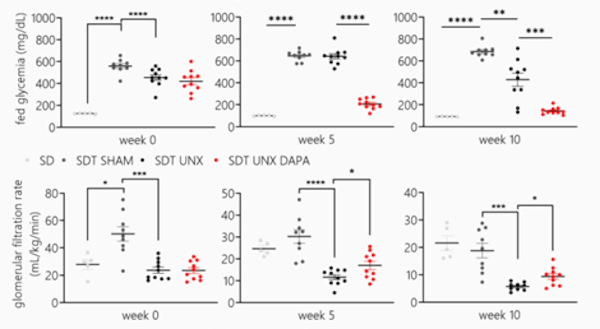
Glycemic control and GFR decline
Sample Image – Dapagliflozin effect on hyperglycemia and GFR
Renal fibrosis assessment by FibroNest
Sample Image – FibroNest antifibrotic readout

- Hyperfiltration followed by >50% GFR decline.
- Glomerulosclerosis, tubular injury, and renal fibrosis.
- Responds to SGLT2 inhibitors (SGLT2i), GLP-1 receptor agonists (GLP-1RA), and ACE inhibitors (ACEi) in this preclinical model.
Download poster: CKD Summit 2024 (PDF)
Retina – Early Diabetic Retinopathy (DR)
Source: ARVO 2018 – ERG deficits and GFAP gliosis.
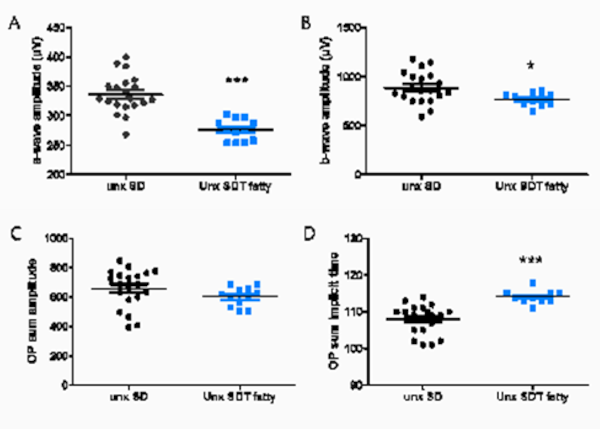
Electroretinography (ERG) deficits
Sample Image – Retinal neurologic dysfunction
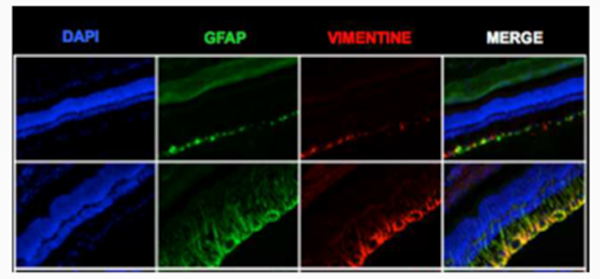
Reactive gliosis in retina
Sample Image – GFAP/Vimentin gliosis
- ERG deficits (A-wave, B-wave, oscillatory potentials).
- GFAP and vimentin-positive gliosis indicating Müller cell activation.
- Retinal vascular dilation and remodeling consistent with early DR.
Download poster: ARVO 2018 – Briand et al. (PDF)
Heart – HFpEF-like cardiomyopathy
Source: Mini-oral HFpEF data – E/A ratio decline and LVEDP elevation.
Cardiac function
Sample Image – Liraglutide effect on HFpEF-like phenotype
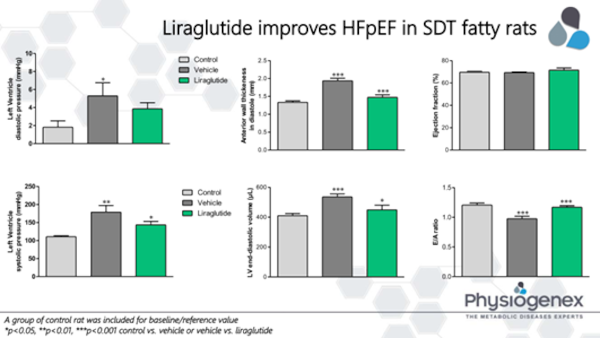
- Preserved ejection fraction (EF) with diastolic dysfunction.
- Elevated left ventricular end-diastolic pressure (LVEDP).
- Responds to GLP-1 agonists such as liraglutide in this preclinical model.
Download mini-oral presentation (PDF)
AI-based Pathology – NephroPath, PEMP, FibroNest
Source: ASN 2024 – NephroPath, PEMP, and FibroNest overlays.
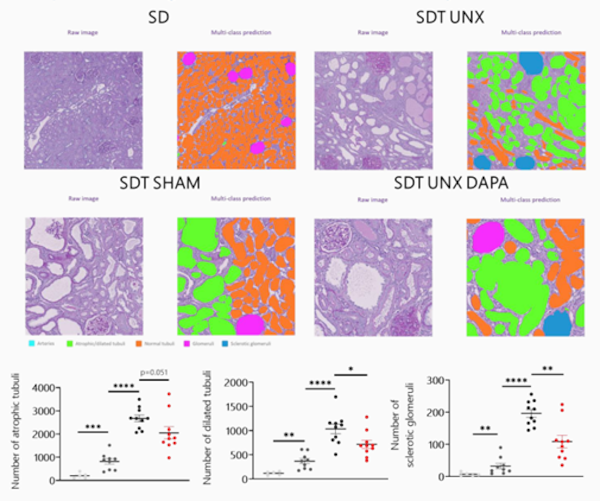
NephroPath AI – glomerular and tubular analysis
Sample Image – NephroPath AI readout
PEMP – podocyte effacement analysis
Sample Image – PEMP podocyte readout
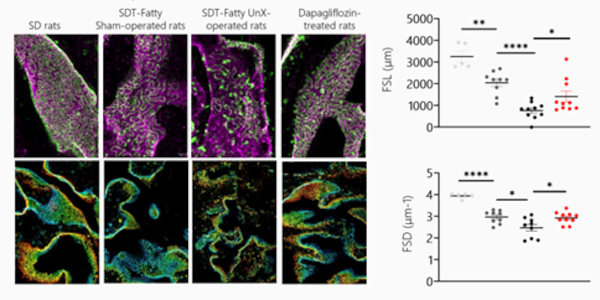
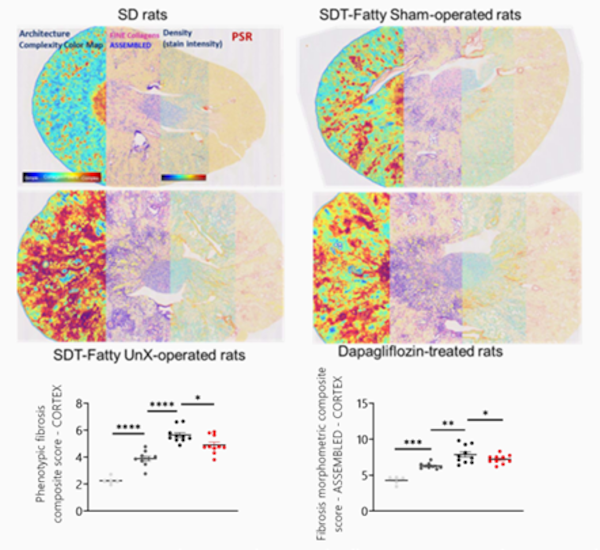
FibroNest – fibrosis depth and volume mapping
Sample Image – FibroNest antifibrotic assessment
- NephroPath – glomerular and tubular lesion analysis.
- PEMP – quantitative assessment of podocyte effacement (FSL, FSD).
- FibroNest – fibrosis depth and volume mapping in renal cortex.
Download poster: ASN Kidney Week 2024 – SDT fatty rat (PDF)
Nerve – Peripheral Neuropathy (NF-L)
Source: ATTD-ASIA 2025 Poster – NF-L reduction by dapagliflozin.
Peripheral neuropathy biomarker NF-L
Sample Image – NF-L (plasma neurofilament light chain)
Dapagliflozin lowers NFLC, a marker of neuropathy, another comorbidity observed in the Unx SDT fatty rat
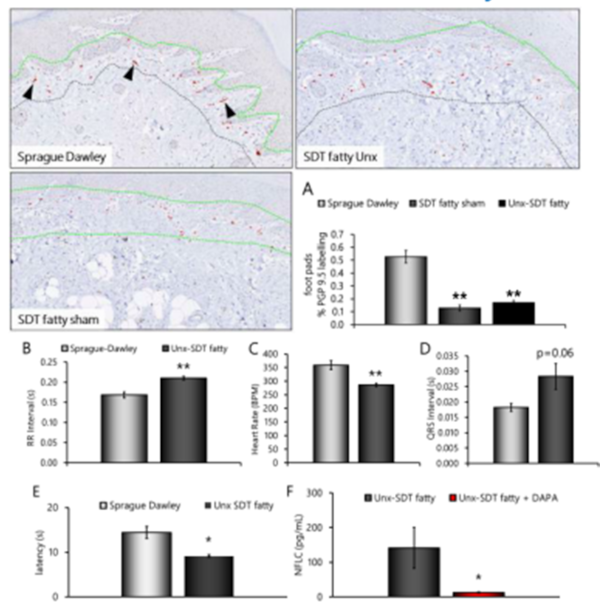
- NF-L elevation indicates peripheral nerve injury in the Unx SDT fatty rat.
- Dapagliflozin lowers NF-L in this model, suggesting improvement of neuropathy-related endpoints.
- Neuropathy appears as an additional comorbidity alongside nephropathy and retinopathy in SDT fatty rats.
Download poster: ATTD Asia 2025 poster (PDF)
Key R&D partners for SDT fatty studies
Organ-focused CRO and imaging partners
- Physiogenex (France) – DKD, HFpEF, and metabolic complications.

- Cardiomedex (France) – Cardiac imaging, HFpEF characterization, and cardiometabolic phenotyping.

- AI pathology partners – Aiosyn, Nipoka, PharmaNest, and others.
These partners play a central role in generating and validating SDT fatty rat data for global pharmaceutical R&D.
Applications
- DKD progression and renoprotective drug evaluation.
- HFpEF and cardiorenal axis studies.
- Early DR neurovascular research.
- AI pathology validation and digital biomarker development.
ATTD-ASIA 2025 e-Poster information
Title:
SGLT2 INHIBITION IMPROVES GLYCEMIC CONTROL, DIABETIC NEPHROPATHY AND NEUROPATHY IN THE SPONTANEOUSLY DIABETIC TORII FATTY RAT, A TRANSLATIONAL MODEL OF TYPE 2 DIABETES
Authors:
François Briand1, Estelle Grasset1, Takeshi Ohta2, Masami Shinohara3, Caroline Dubroca4, Thierry Sulpice1,4
1Physiogenex, FRANCE
2Graduate School of Agriculture, Kyoto University, JAPAN
3CLEA Japan Inc, JAPAN
4Cardiomedex, FRANCE
This work will be presented as an e-Poster at ATTD-ASIA 2025.
Please search for “SDT fatty” or “SGLT2 inhibition” in the e-Poster system.
FAQ – SDT fatty rat and ATTD-ASIA 2025 data
- Q1. What is the SDT fatty rat model?
- The Spontaneously Diabetic Torii (SDT) fatty rat is a translational model of type 2 diabetes that develops multi-organ complications, including diabetic kidney disease, early diabetic retinopathy, HFpEF-like cardiomyopathy, and peripheral neuropathy.
- Q2. Which organs and endpoints are covered on this page?
- This page highlights kidney (DKD), retina (early DR), heart (HFpEF-like cardiomyopathy), peripheral nerve (neuropathy, NF-L), and AI-based pathological endpoints (NephroPath, PEMP, FibroNest) in SDT fatty rats.
- Q3. Are these data clinical or preclinical?
- All data presented here are preclinical, obtained in SDT fatty rats. They are intended for translational and drug discovery research and do not represent clinical efficacy or safety in humans.
- Q4. Which drug classes have been evaluated in SDT fatty rats?
- The model has been used to evaluate SGLT2 inhibitors, GLP-1 receptor agonists, ACE inhibitors, and other cardiometabolic interventions, focusing on their effects on DKD, HFpEF-like phenotypes, neuropathy markers, and histopathological endpoints.
- Q5. How is AI-based pathology used in this model?
- AI platforms such as NephroPath, PEMP, and FibroNest are applied to kidney sections to quantify glomerulosclerosis, tubular injury, podocyte effacement, and renal fibrosis, enabling reproducible digital biomarker development.
- Q6. How can I access detailed posters and datasets?
- Selected posters and presentations (CKD Summit 2024, ARVO 2018, ASN Kidney Week 2024, HFpEF mini-oral) can be downloaded from this page. For additional data or collaboration, please contact CLEA Japan and partner CROs listed above.
- Q7. How can I collaborate or run studies using the SDT fatty model?
- For collaboration, joint studies, or access to the SDT fatty model, please use the inquiry form at the bottom of this page. Confidential discussions can be arranged upon request.
Contact
For collaboration, joint studies, or model access, please contact CLEA Japan and our partner CROs using the inquiry form below.
Confidential discussion available upon request.