klotho/Jcl
Animals/Genetically Modified Animals/

Ordering name: klotho/Jcl
Nomenclature: C3;B6-KlTg(SLC9A1)/Jcl
Availability: Cryopreserved
Genetically modified animal (subject to the Cartagena Protocol on Biosafety)
Characteristics
kl/kl mice grow normally until 3-4 weeks of age, then show growth retardation after weaning, and die around 8-9 weeks of age. External appearance is generally normal except for backward curvature.
(Diet is autoclaved CE-2)
Other characteristics include:
- Hypokinesia and dysbasia
- Thymic sexual organ and atrophy
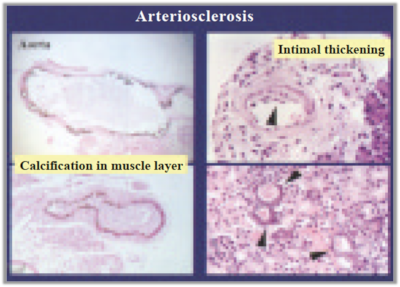
- Arteriosclerosis
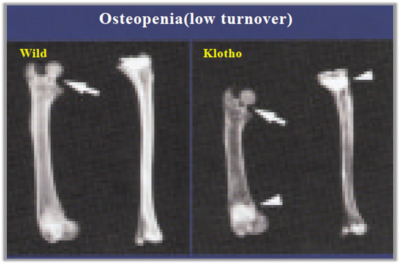
- Osteoporosis
- Ectopic calcification
- Dermatrophy
- Emphysema pulmonum
- Pituitary gland abnormality
Origin
klotho mice were found among a mutant group derived from mutant gene-introduced chimeric mice created by Dr. Yoichi Nabeshima.
The klotho gene was identified as coding for a new type I membrane protein with a signal sequence at the N-terminal and a transmembrane domain at the C-terminal, and it is mainly related to calcium control in vivo.
CLEA Japan received the strain from Dr. Nabeshima and started sales from 2002.
Detailed Catalog (PDF)
Model Highlights & Key Pathology Findings (from PDF)
Some of the materials in the PDF document are excerpted here.
▼ Arteriosclerosis
▼ Osteoporosis
Download Detailed Study (Japanese)
▼ For more details (*Japanese) ▼

◆ References

Our Contract Research Services related with This Animal
For details on our contract research services, including cryopreserved embryos, contracted testing, and the provision of research materials such as blood and organs, please click here .
FAQ
What is klotho/Jcl?
klotho/Jcl is a human premature geriatric syndrome model mouse. The klotho gene encodes a type I membrane protein related mainly to calcium control in vivo.
What are the main characteristics of kl/kl mice?
kl/kl mice grow normally until 3–4 weeks of age, then show growth retardation after weaning and die around 8–9 weeks of age. They exhibit arteriosclerosis, osteoporosis, ectopic calcification, dermatrophy, emphysema pulmonum, pituitary gland abnormality, hypokinesia, and dysbasia.
Is klotho/Jcl a genetically modified animal?
Yes. klotho/Jcl is a genetically modified animal and is subject to the Cartagena Protocol on Biosafety.
What is the availability of klotho/Jcl?
The availability is Cryopreserved.
What is the origin of the klotho mouse strain?
The klotho mouse was discovered among mutant gene-introduced chimeric mice created by Dr. Yoichi Nabeshima. CLEA Japan received the strain from Dr. Nabeshima and started sales in 2002.
Inquiry
▼ Please feel free to contact us